
Tulane Innovation Institute Announces Winners of 2026 Open Season Pitch Competition
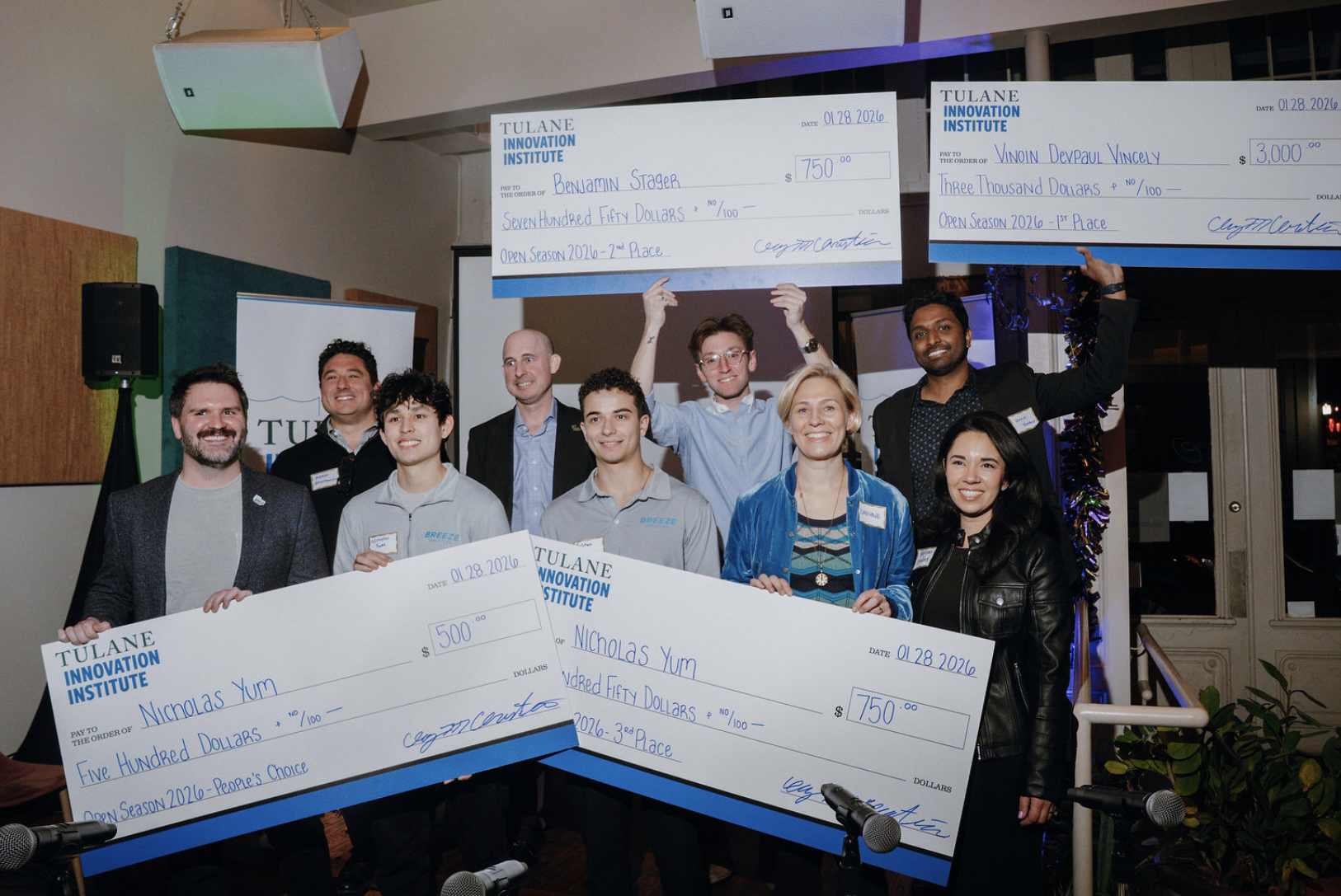
Group shot of the winners and judges of the Open Season 2026 Pitch Competition.
“Participating in Tulane Innovation Institute pitch competitions has been one of the most impactful parts of our journey. It has helped us connect with mentors and the broader entrepreneurial ecosystem.”
That’s how Vinoin Devpaul Vincely, PhD, an innovation fellow and a biomedical engineering alum from Tulane University’s School of Science & Engineering, summed up the evening of January 28, 2026, at Oak & Ale. The venue was packed with aspiring entrepreneurs, Tulane and New Orleans community members, interested investors, and volunteer judges. The atmosphere was intentionally welcoming, reflecting Open Season’s purpose: lowering barriers to entrepreneurship and helping more people see what their ideas might become.
Open Season invites Tulane faculty, staff, students, and recent alumni to submit early-stage ideas and present them to the Innovation Institute team in an initial round. A group of finalists then competes for prize money at a public event. Every participant receives guidance and support, regardless of whether they advance. The goal is to give experience with what entrepreneurship can look and feel like, emphasizing that startups often come from personally identified gaps or attempts to address broader societal problems.
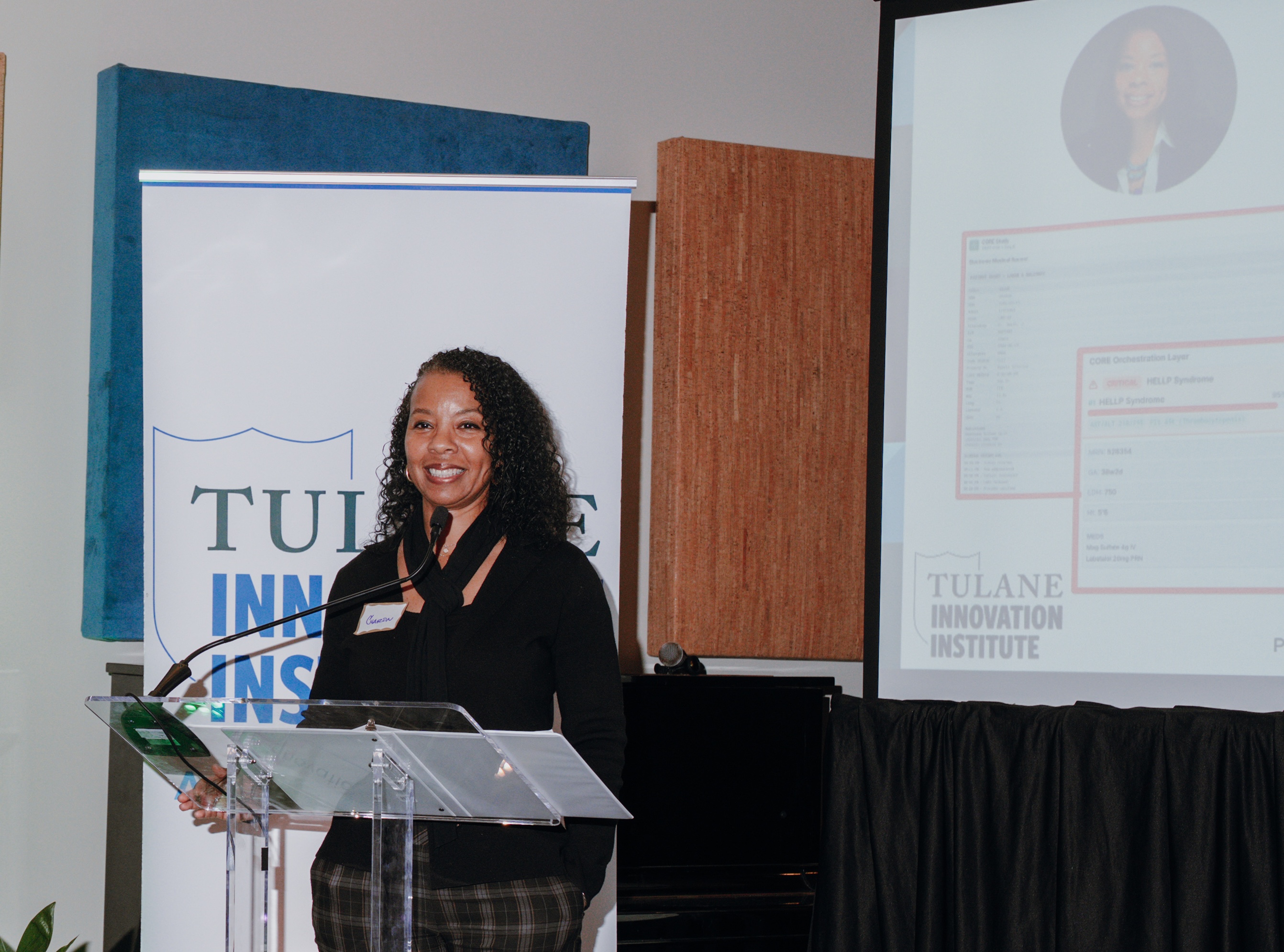
Charon Flowers Maple presented her idea for preventing maternal deaths.
The finalists reflected that philosophy. Denys Bondar, PhD, an associate professor in the School of Science & Engineering, proposed a cost-efficient sensor swarm using cutting-edge AI for real-time drone detection. Ian Faul and Keona Patel, undergraduate students in the School of Science & Engineering, presented a social layer platform for academic research papers that shows how scholarship is read, debated, and valued after publication. Landon Roemer, an undergraduate at Tulane’s A. B. Freeman School of Business, shared SafeSublet, a site he built after struggling to find summer housing for a Chicago internship.
Several health-focused projects also made the finals. Charon Flowers Maple, a Doctor of Public Health candidate at the Celia Scott Weatherhead School of Public Health and Tropical Medicine, presented a data orchestration engine for preventing maternal deaths. Kimber Ashman, PhD, an imaging systems engineer in Tulane’s Department of Biomedical Engineering, pitched a tool to ensure quality and accountability in clinical AI. Prasun K. Datta, PhD, associate professor of microbiology and immunology at the Tulane School of Medicine, introduced a point-of-care test for oral pathogens.
Each finalist had three minutes on stage, followed by two minutes of questions from a judging panel including Morgan England (Bevy Labs), Mark Graffagnini (Cara Stone LLP), Teddy Smith (Cinelevel), and Daphne Johnson (DAPHNE Marketing & Growth Advisory). The panel provided encouraging and supportive feedback, drawing on a mix of skill sets, including startup support, finance, and marketing.
The range of people and perspectives is what makes this event effective. The competition puts faculty researchers on stage with undergrads, bringing together healthcare and tech projects, to reinforce the idea that innovation can come from anywhere.
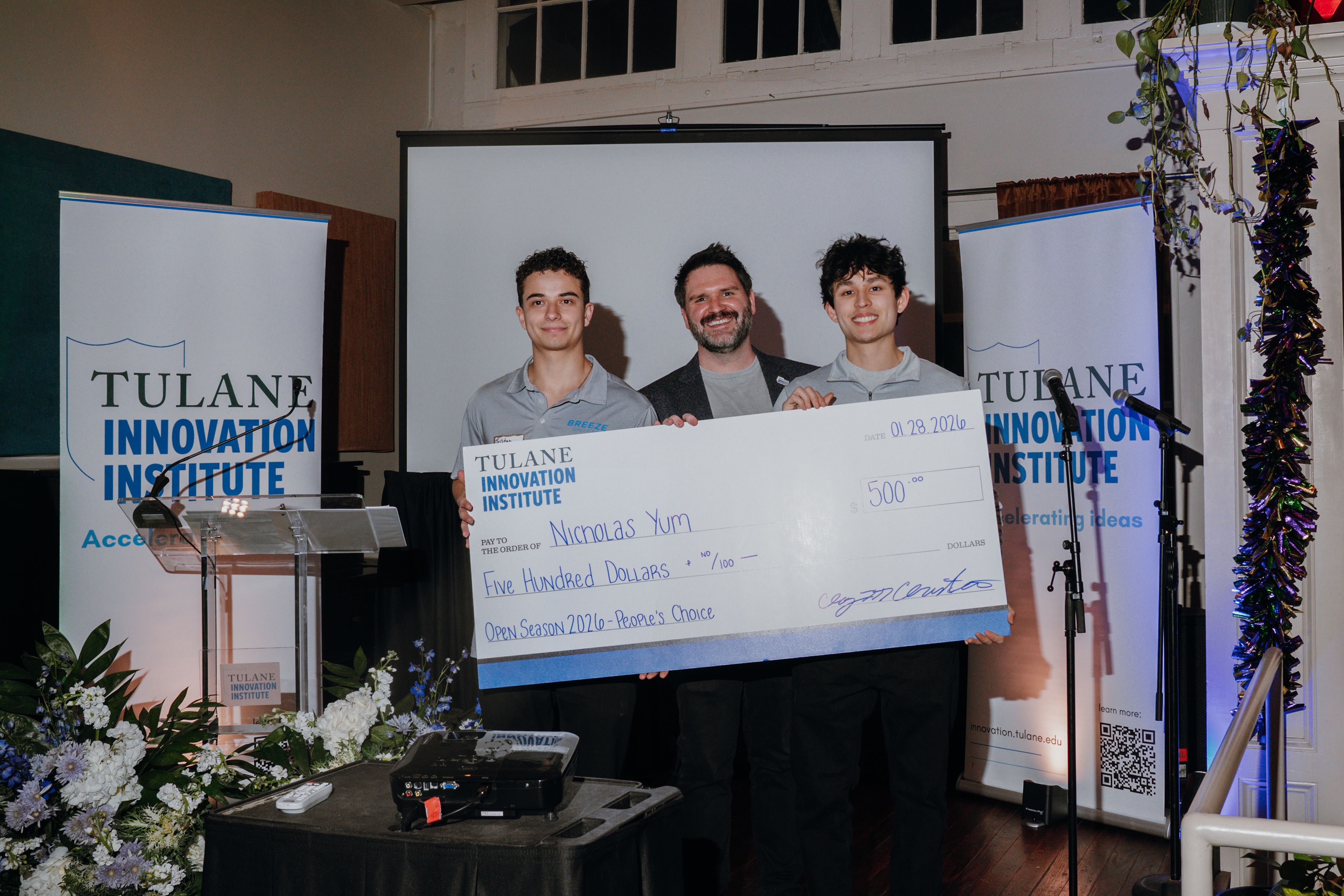
The Breeze Shuttles team, pictured with Claiborne Christian, executive director of commercialization at the Tulane Innovation Institute
GradienTek took third place. Founded by Benjamin P. Stager, a CAIDS career advisor and Tulane alumnus, the platform streamlines the creation of educational materials for teachers, students, and tutors.
Breeze Shuttles won second place and the People’s Choice award. The free-to-low-cost, ad-supported electric micro transit service was founded by Tulane alumni Nicholas Yum and Tristan Sariego and is now expanding across New Orleans and other college towns.
First place went to LumaWave Inc., founded by Vincely. The company’s wearable fetal oxygenation sensor enables continuous monitoring, filling a gap in maternal and fetal care. Vincely has participated in multiple Tulane Innovation Institute competitions, including two Open Medical Innovation Challenges (Open MIC Night).
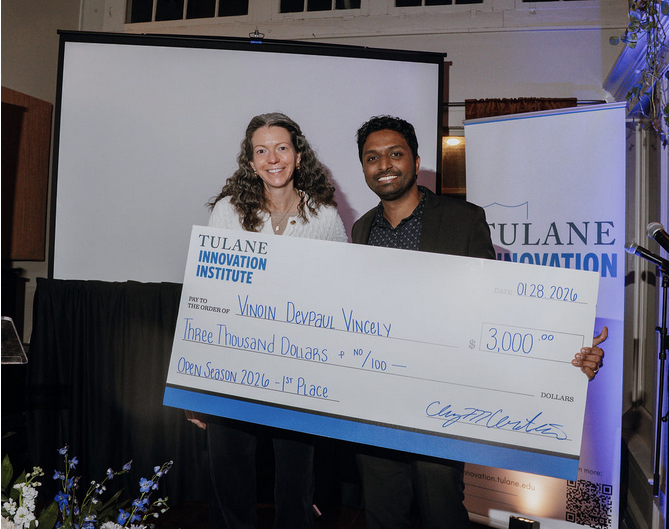
LumaWave founders, Carolyn L. Bayer, associate professor of biomedical engineering and Vinoin (Vin) Devpaul Vincely
“From our very first pitch to now, the growth has been tremendous,” he said. “We’ve learned how to communicate our technology with clarity and purpose, and how to translate complex ideas into real-world value.”
The $3,000 first-place prize came at a "perfect moment" for LumaWave, Vincely said, covering materials, prototyping, and testing. "For a young startup, support like this makes a real difference. It reduces risk and lets us focus on building something that can truly impact healthcare."
As the night wound down, conversations and connections continued. Open Season's outcome isn't just about who takes home a prize; it's about who decides to keep going and how they can find resources and support across Tulane University and in New Orleans.
“I’d encourage anyone to take the leap, you’ll walk away more confident, more prepared, and more connected than when you started,” Vincely added.
The Tulane Innovation Institute will host its next competition, Open MIC Night, on April 15, 2026. Applications are now open for projects in health, wellness, and medicine.