Huygens Metalens
Advanced lenses used in electronics, cameras, and microscopes are often bulky, costly, and difficult to manufacture. This solution is a new approach that aims to solve a significant challenge by new metalenses comprised of the phase change material (pcm) antimony trisulfide (sb2s3).
The following technologies are offered as a “bundle” or can be pursued individually.
- Infared-Transparent Photovoltaics for Coupling Solar Electric to Solar Thermal Energy Generation
- Huygens Metalens
- Schottky-Junction Photovoltaics using Transition-Metal Dichalcogenides
- Concentrated solar photovoltaic and photothermal system for energy generation and storage
- Sunflower receiver for Hybrid CPV/T energy conversion
- Direct Fluid Cooling Solar module for Hybrid Photovoltaic-Solar Thermal Energy Conversion
- Transmissive Concentrating Photovoltaic Module for Combined High-Efficiency Electricity and Thermal Energy Generation
The Problem
Advanced lenses used in electronics, cameras, and microscopes are often bulky, costly, and difficult to manufacture. These limitations make it hard to integrate them into newer, smaller, and more efficient technologies. As demand grows for compact devices that can handle more complex tasks, the traditional lens options are no longer keeping pace. A more flexible, scalable, and affordable alternative is needed to support the next generation of optical technologies.
The Solution
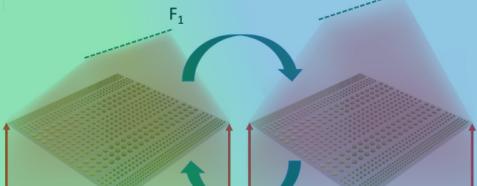
Tulane researchers are creating a new approach that aims to solve a significant challenge by new metalenses comprised of the phase change material (PCM) antimony trisulfide (Sb2S3). The inventors chose this material due to its near-infrared refractive contrast when switched between amorphous and crystalline phases. These materials can be created using ion sputtering and in situ substrate heading for beam deflectors, amplitude and/or phase modulation, holography, integrated photonic circuits/chips, and others.The technology is at a laboratory testing stage of development, where the inventors have prototyped the Sb2S3 substrates and shown the materials’ refractive index is similar to existing published data.
The Opportunity
This optical breakthrough will push the boundaries of compact lens design, perfect for integration into next-gen imaging systems, AR headsets, or biomedical devices.