3D Printed Architectural Facades for Climate Adaptation
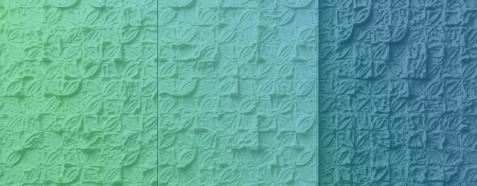
A collaboration between inventors at Tulane University and the University of Michigan has designed a new system for adapting buildings to climate change. Reinterpreting traditional bricks, tiles, and shingles, modular ceramic components are fabricated and assembled into larger systems of enclosure and habitation. Full-scale, customizable prototypes were designed, fabricated using robotic clay 3D printers, and evaluated across a range of textural, ornamental, and ecological properties.
The Problem
Traditional building exteriors such as bricks, tiles, and shingles are primarily designed to shed water and separate indoor and outdoor environments. They are standardized, passive systems that offer limited ability to respond to changing climate conditions. As climate change increases the frequency of heavy rainfall, flooding, heat waves, and water scarcity, conventional façades do little to reduce strain on stormwater systems, manage heat, or support biodiversity. There is a growing need for building surfaces that do more than protect—they must actively adapt to unpredictable weather and contribute to environmental resilience.
The Solution
This technology is a new type of climate-responsive building façade made from modular ceramic components that are 3D printed using robotic clay printers. Instead of acting only as a barrier between indoors and outdoors, these façade systems are designed to actively manage environmental conditions. The ceramic modules can retain, divert, and delay rainwater, helping control stormwater flow, while also moderating temperature and supporting plant and animal life. Because the components are digitally fabricated, they can be customized in form and texture while using a natural, low-waste material. The result is a building exterior that improves resilience to climate change while enhancing aesthetics and ecological performance.
The Opportunity
This technology can be used in residential, commercial, and urban construction projects seeking climate-adaptive and sustainable design solutions. It is particularly valuable in flood-prone cities, water-scarce regions, and dense urban environments where stormwater management and heat mitigation are critical. Developers, architects, urban planners, and green building companies could integrate these modular ceramic façade systems into new construction or retrofit projects. The ability to mass-customize components also opens opportunities in high-design architecture, sustainable construction markets, and cities investing in resilient infrastructure.