
Join the Office of Intellectual Property Management (OIPM) and the Tulane Innovation Institute for an intellectual property (IP) education workshop series, emphasizing practical knowledge, interactive learning, and meaningful engagement. Open to faculty, postdoctoral fellows, research staff, and senior graduate students from all Tulane campuses and schools.
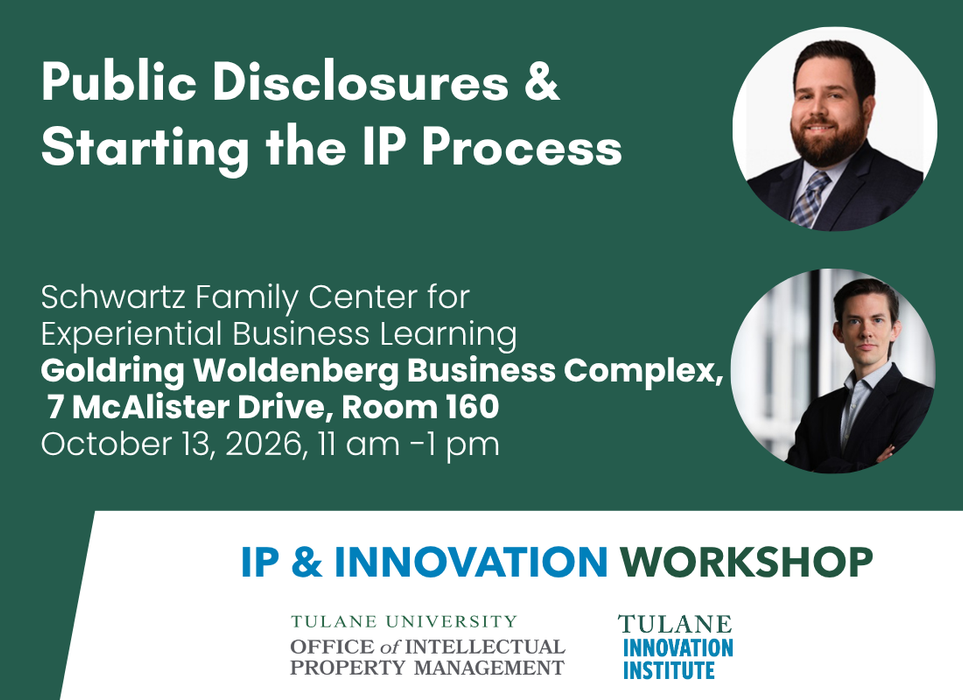
Public Disclosures & Starting the IP Process
October 13, 2026
11 am-1 pm
The Schwartz Family Center for Experiential Business Learning
Goldring Woldenberg Business Complex
7 McAlister Drive, Room 160
In today's "publish or perish" environment, routine academic activities — from conference presentations to thesis defenses — can trigger public disclosures with serious consequences for patent rights worldwide. This session clarifies what counts as a disclosure and how to recognize the critical windows that determine whether patent protection remains possible. We'll demystify the invention disclosure process, walk through what happens after you submit to OIPM, and clear up the most common misconceptions that can inadvertently cost researchers their IP rights. You'll leave with a practical framework for sharing your research confidently while keeping commercialization options open.