Bridging the Practical and the Personal: How New Orleans Startup Meli Is Modernizing Estate Planning
Interview with Amanda Fetter and Artemis Antippas | Co-founders of Meli
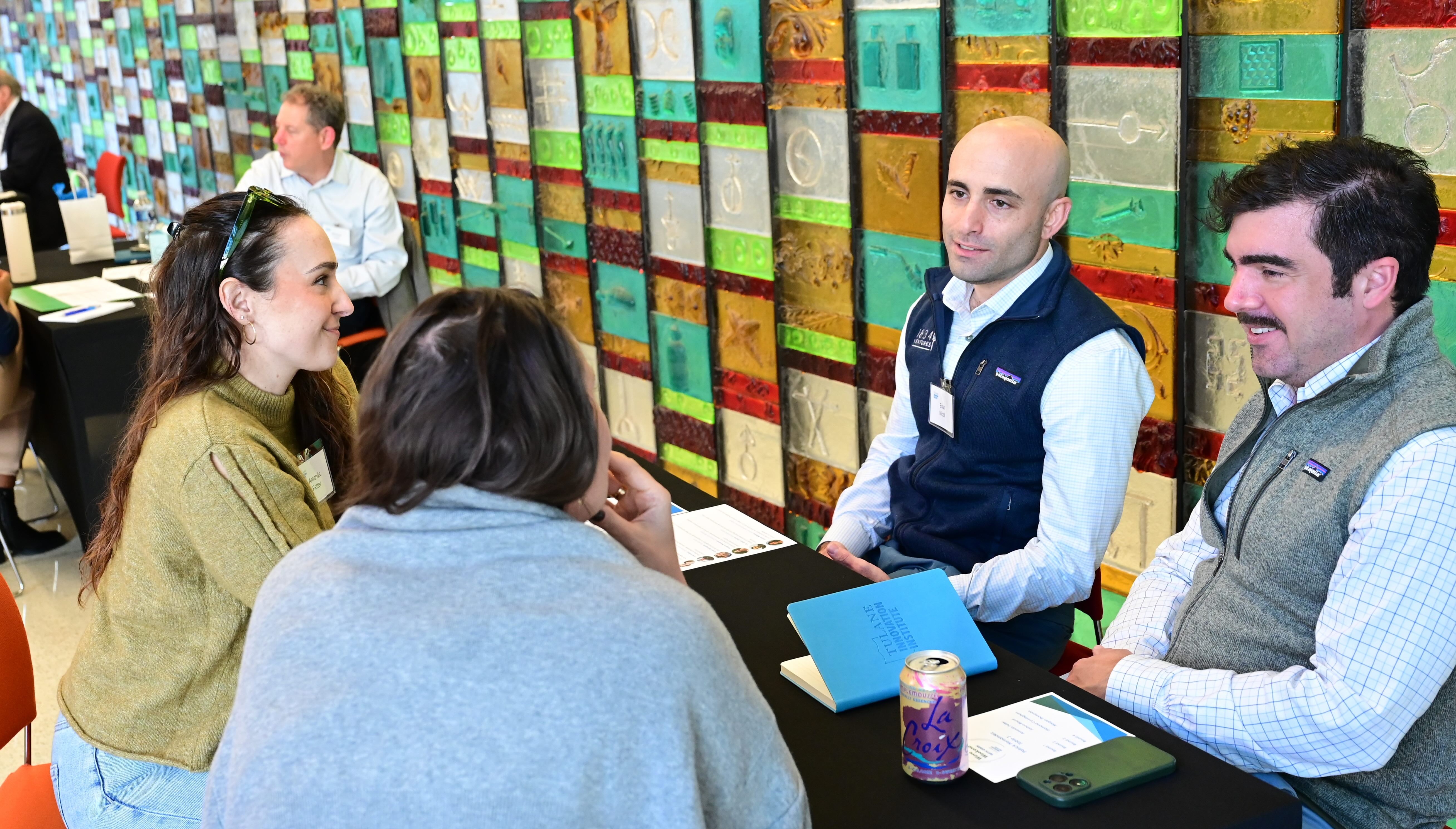
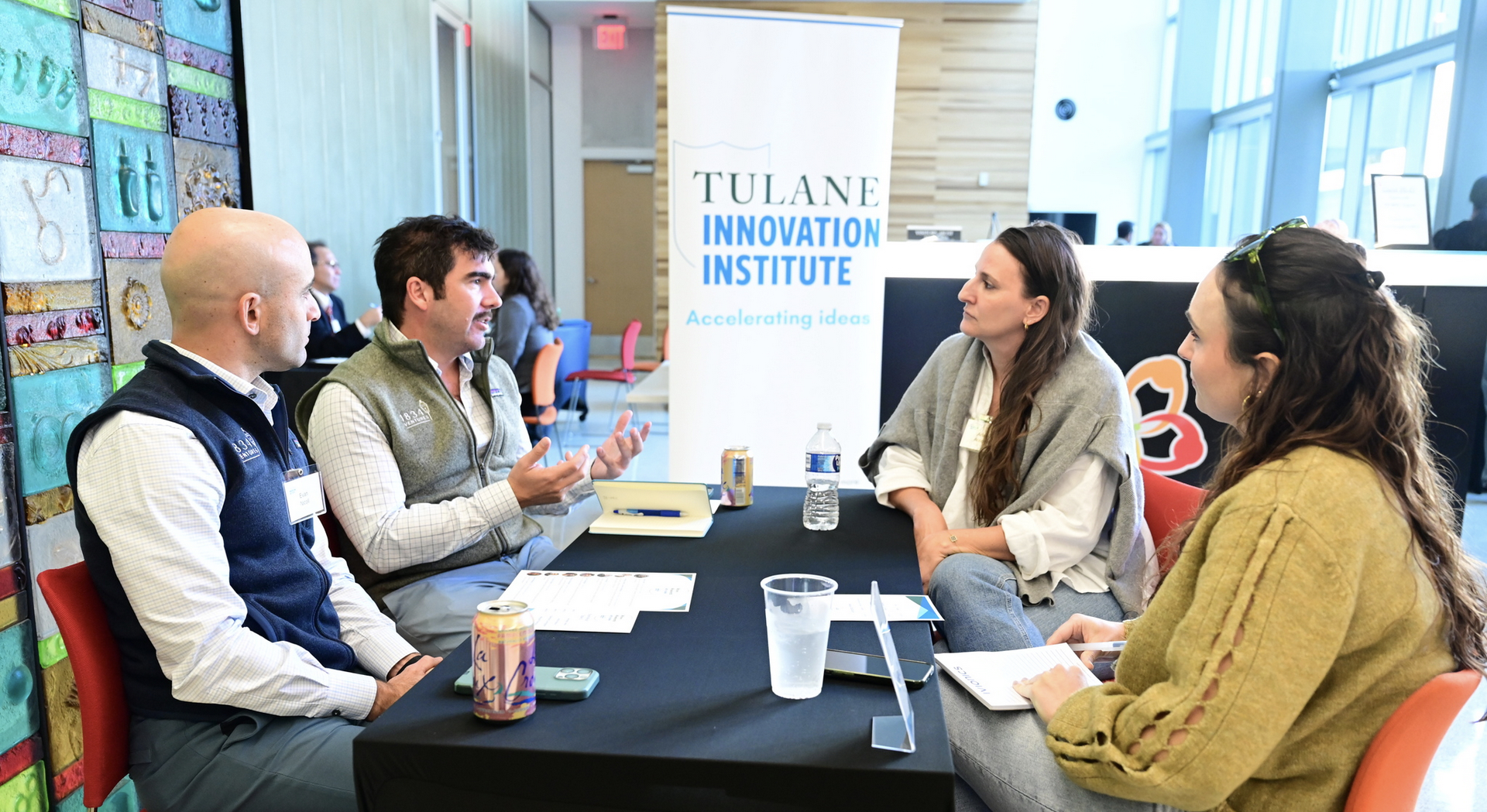
Amanda Fetter (left) and Artemis Antippas (Meli) with Evan Nicoll and Patrick Hernandez (1834 Ventures) at the Tulane Innovation Institute Speed Mentoring event (November 2025).
Every family has items that seem ordinary until someone explains why they mattered: a ring worn at a wedding, a painting chosen for a first home, or a coin collection patiently built over time. These are the kinds of objects that carry meaning across generations, yet they often lose context when a loved one passes away.
Millennials and Generation X are now inheriting from Baby Boomer parents, a generation of collectors whose own parents lived through the Great Depression and learned to save everything. Without careful planning, heirlooms can lose their significance, be physically lost, or even create conflict among family members.
This is where Meli, a New Orleans–based startup, comes in. Co-founded by Amanda Fetter and Artemis Antippas, Meli is an early-stage, AI-powered B2B2C SaaS platform focused on how personal property is documented in estate planning. Built for wealth managers, financial advisors, and their clients, the platform digitizes and documents personal property while capturing both intent and sentiment alongside assets—an area that even experienced advisors often struggle to manage using traditional tools. By turning emotionally meaningful belongings into structured data, Meli helps ensure that the stories, context, and value behind items such as jewelry, artwork, or china are preserved and accessible over time.
In our interview, Amanda Fetter (a Tulane University alumna, M.A. ’18) and co-founder Artemis Antippas discuss how Meli was created, how the tool works, the challenges of raising investment, and how participation in the Tulane University Innovation Institute Startup Team Mentoring program has helped refine their vision.
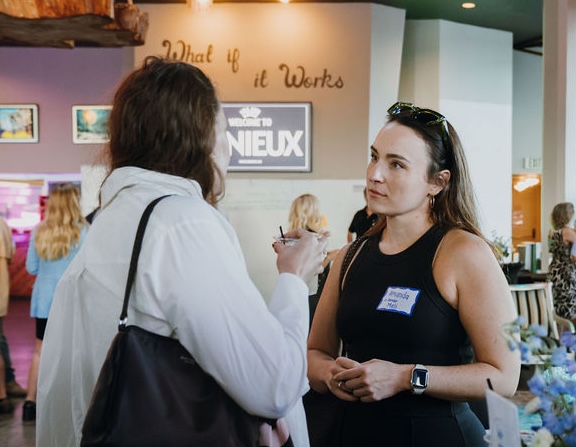
Amanda Fetter talking to co-founder Artemis Antippas at the Tulane Innovation Institute Happy Hour at the Nieux Society (September 2025).
Q— What is Meli?
A— Meli is a secure, AI-powered platform built for financial advisors and their clients, with two connected tools. First, a client-facing app where clients can easily upload photos of their belongings, add stories through voice or typed notes, assign beneficiaries, and receive AI-generated descriptions and valuations. Second, a connected admin console that gives wealth managers real-time access to this data, making estate planning faster, clearer, and more personalized. At its core, Meli is about preserving meaning while reducing friction for both families and the professionals who support them.
Q— Who is the Meli customer?
A— Meli is intentionally built as a B2B2C platform. Our primary customers are wealth managers and financial advisors, and our end users are their clients.
The client-facing app is designed for individuals and families to easily capture personal belongings, stories, and intentions in a way that feels intuitive and human. The advisor admin console, by contrast, is purpose-built for professionals who need structured data, visibility, and tools to strengthen client relationships over time.
By serving both sides of the relationship, Meli helps advisors deliver deeper value while helping clients feel seen, prepared, and understood.
Q— What was your ah-ha moment that led to creating Meli?
A— Meli was built from a deeply personal place for both of us. We come from large, matriarchal families and were each appointed by our grandmothers as the unofficial “storykeepers” of family memory.
Artemis’s Yiayia is still alive and relies on her to remember the stories behind her belongings and her wishes for who should receive them. Still, none of it is formally documented or legally binding. Artemis lives with the very real fear that, when the time comes, those intentions could be lost, and conflict could follow. She came up with the idea for Meli as a way of protecting her Yiayia’s wishes.
Amanda experienced the other side of that reality when her grandmother passed away with no plan in place, and her family fractured in the aftermath. The most intense conflict wasn’t over money; it was over sentimental items. At the same time, she realized how many stories her grandmother once told her were already slipping through the cracks simply because memory fades. She wished she’d had a better way to preserve those stories while she was still alive.
When Artemis approached Amanda with the idea for Meli, it instantly clicked.
That combination of fear about future family conflict and grief over what had already been lost became our ah-ha moment. We began working on Meli to give families a better option.
Q— What is your co-founder story?
A— We connected over our shared experiences, values, and creative instincts. While we come from different professional backgrounds, we immediately recognized that we were thinking about the same problem from complementary angles.
Artemis brings the creative vision and emotional intelligence of an artist and entrepreneur, while Amanda brings a background in marketing, business development, and systems thinking. Meli sits right at the intersection of those skill sets. It requires empathy and structure, storytelling, and scalability.
Once we realized how aligned we were, working together felt natural. Meli didn’t start as an abstract startup idea. It started as something we needed ourselves.
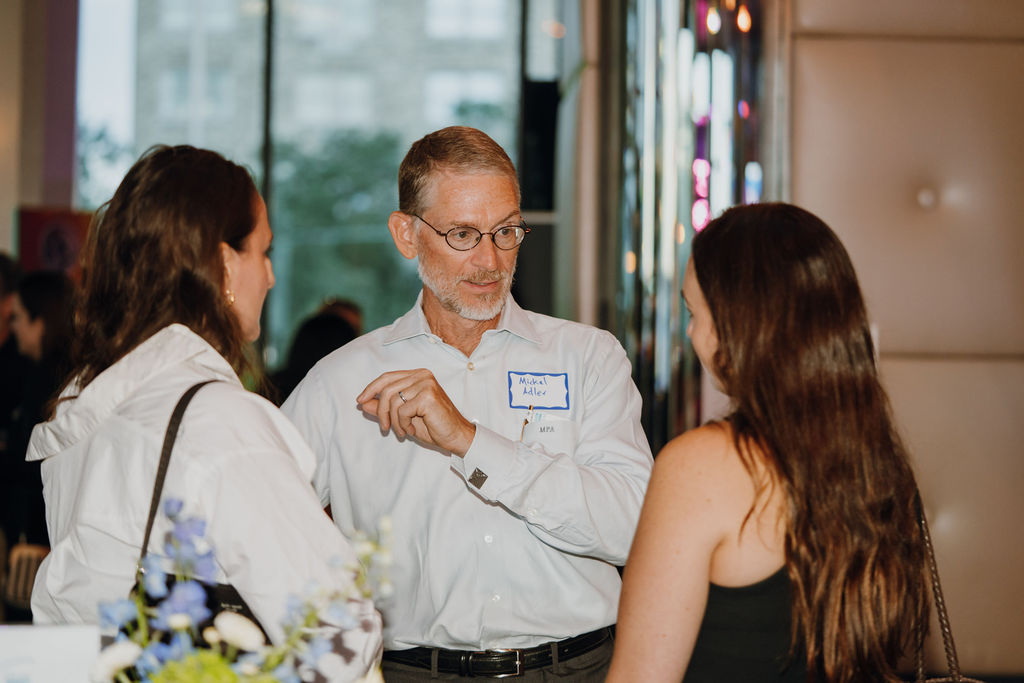
Amanda Fetter and Artemis Antippas with Boot 64 Managing Partner Mickal Adler at the Tulane Innovation Happy Hour (September 2025)
Q— Why did you choose to apply for Startup Team Mentoring?
A— The mentor network at Tulane Innovation Institute is incredibly impressive. Even before applying to the formal program, we benefited from ad-hoc mentor sessions and immediately saw the value of having access to professionals across industries and disciplines, not just locally, but nationally. While New Orleans has a supportive entrepreneurial community, it’s still a developing startup ecosystem and has its limitations. Having access through Tulane to mentors in more mature tech markets like San Francisco and New York was invaluable for us as founders building a national company. Those relationships expanded our perspective, sharpened our strategy, and helped us build a network that reflects the scale of what we’re creating.
As early-stage founders, we also knew we needed more than surface-level advice. We needed people who understood how to build real companies. The depth and credibility of the mentor network made applying an easy decision.
Q— What has Startup Team Mentoring contributed to Meli?
A— Our mentors have been our biggest champions, and the growth we’ve experienced during this program has been remarkable.
We are really proud of what we’ve built over the past year and how far we’ve come. We’ve matured as founders, clarified our path, and made stronger, more confident decisions. Our mentors’ guidance and support have played an important role in our journey to this point.
What’s been especially meaningful is that our mentors didn’t just offer advice—they provided tangible, measurable support. They helped us build our financial projections, opened doors to colleagues, and made key networking connections that have moved the company forward. That level of commitment isn’t typical, and we’re incredibly grateful for it.
Q— Currently, what are your most important needs as a startup in New Orleans?
A— Right now, our most important need is fundraising. What we’ve found is that investment opportunities in New Orleans tend to be geared toward later-stage companies already generating revenue. New Orleans funds are a bit more risk-averse than funds in San Francisco, which are more excited by innovation and eager to take risks. Not many funds want to lead, but they’re willing to co-invest alongside other funds. That first check is so important, and we need more funds that are willing to take the risk if we want to truly establish New Orleans as a viable ecosystem for startups.
Q— What advice would you give to a startup considering involvement with Startup Team Mentoring?
A— Don’t be afraid to ask for what you need. Mentors know how to set boundaries around what they can offer, and there’s no harm in asking. They’re there because they want to help, but you also have to take the initiative. The startups that get the most out of mentorship are the ones that are honest, curious, and willing to put in the work. The more you put into this program, the more you get out of it.
Meli’s Startup Team Mentoring mentors include Paul Daitz, Viq Shariff, Tad Bogdan, Maartje van Krieken, and Dave White. If you are a startup interested in applying to Startup Team Mentoring, applications for the 2026-2027 annual cohort are open through February 1, 2026. The program is free and open to all startups in the greater New Orleans community.